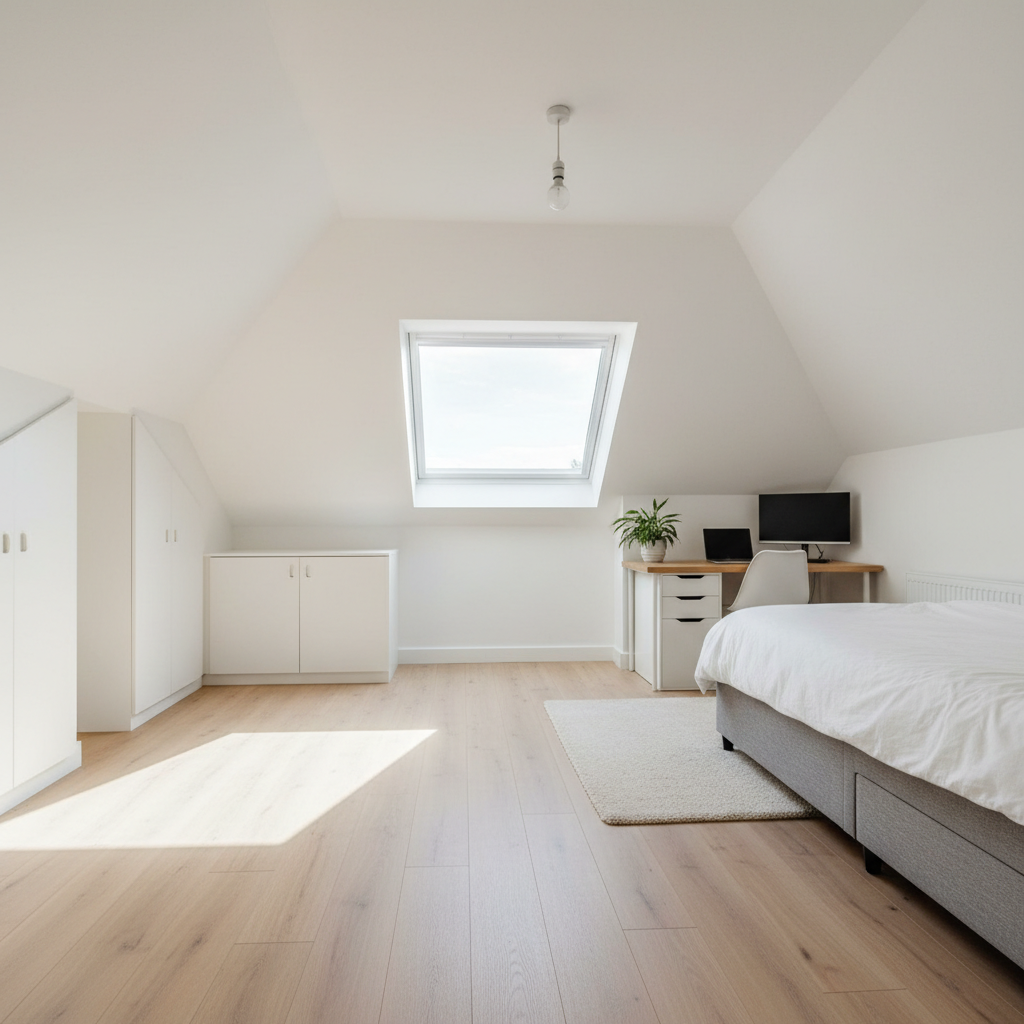
Loft Conversions in Morpeth, Northumberland
Morpeth's historic county-town specialists in loft conversions — from Georgian and Victorian townhouses within the conservation area to the modern commuter estates on the town's outskirts. We understand the planning constraints that come with listed buildings and period rooflines around the town centre, and the straightforward family extensions the newer estates allow. Whether you're adding a dormer to a period terrace or a Velux conversion to a family home, our Morpeth-based team delivers considered, conservation-aware work.
Get Your Free Quote
No obligation — we'll tell you the cost upfront
Fully Insured
£5M Public Liability
FMBA Member
Federation Accredited
15+ Years
Serving Morpeth
4.9 Rating
120+ Reviews
Loft Conversions on Morpeth's Georgian & Victorian Townhouses
The streets around Morpeth town centre — Newgate Street, Bridge Street, Oldgate — are lined with Georgian and Victorian townhouses built when Morpeth was Northumberland's thriving county town. These period properties often have generous roof voids and steep pitched roofs that convert beautifully, but they also come with character details that demand a careful hand: lath-and-plaster ceilings, chimney breasts that need structural support, and roof timbers that have been doing their job for 150 years.
We've worked on enough period townhouses in Morpeth to know which roofs convert cleanly and which need structural reinforcement before work starts. A dormer on a Victorian terrace near the Clock Tower is a different proposition to one on a 1990s semi, and we price accordingly — no nasty surprises once the plasterboard comes off.
Conservation-Area & Listed-Building Planning Around Morpeth Town Centre
A large part of central Morpeth sits within a designated conservation area, and a number of buildings are listed. That changes what's possible. A standard rear dormer that would sail through on a modern estate may need a different roofline, different materials, or full planning permission on a period townhouse within the conservation boundary.
We handle the planning conversations with Northumberland County Council so you don't have to. Where a conservation-area property needs a more sensitive design — a conservation-style dormer, materials that match the existing slate or stone, roof windows set flush rather than protruding — we'll tell you upfront and design accordingly. If your building is listed, we'll work through the listed-building consent process with you. No pretending it's straightforward when it isn't.
Dormer vs Velux: Choosing the Right Conversion for a Period Roofline
On a Morpeth period property, the choice between a dormer and a Velux conversion usually comes down to headroom, roof pitch, and whether you're inside the conservation area. A Velux conversion — roof windows set into the existing slope — is the least disruptive and most affordable option, and on a steep Victorian roof with decent existing headroom it can give you a usable room without touching the roofline. That makes it the natural choice where planning constraints rule out a dormer.
A rear dormer gives you full standing headroom and a proper rectangular room, which is why it's the most popular conversion on Morpeth's terraces. On properties outside the conservation area, a dormer typically falls under Permitted Development. Inside it, we may need to design a more sympathetic version. We'll walk you through both options at the free survey and tell you honestly which makes sense for your roof, your budget, and your planning situation.
Loft Conversions on Morpeth's Modern Commuter Estates
Morpeth has grown steadily over the decades, and the estates on the town's outskirts — Stobhill, Loansdean, Cottingwood, and the newer developments off the A1 — are full of 1970s through to 2010s family homes. These properties are straightforward by comparison to the town centre: hipped roofs ideal for hip-to-gable conversions, predictable roof structures, and Permitted Development rights that make the planning side simple.
A hip-to-gable with a rear dormer is the combination that delivers the most usable space on these estates — turning an awkward triangular loft into a full bedroom with en-suite, or a generous home office. Because the housing stock is consistent across an estate, we can quote accurately and build efficiently. Most conversions on Morpeth's modern estates qualify entirely under Permitted Development, so there's no planning wait.
Serving the Rural Northumberland Villages Around Morpeth
Morpeth sits at the gateway to rural Northumberland, and we regularly work in the villages and smaller towns that surround it — Ponteland, Rothbury, Hexham, Seahouses, Riding Mill, Prudhoe. Several of these places have no dedicated loft conversion specialist, which means homeowners there are often choosing between a national firm that doesn't know the area and a general builder who doesn't specialise in lofts.
We're based in Morpeth and we know the planning regimes across Northumberland — from the conservation constraints in Rothbury to the rural stone properties around Hexham. If you're in one of the surrounding villages and you've been told no one will travel to you, give us a ring. We cover the wider area and we'll give you the same straight-talking, fixed-price service we deliver in Morpeth itself.
Morpeth Loft Conversion FAQs
Do I need planning permission for a loft conversion in Morpeth?
Most loft conversions in Morpeth fall under Permitted Development and don't need planning permission — but properties within the Morpeth conservation area, listed buildings, and any conversion that exceeds the PD volume limits will need a full application. We'll confirm which applies to your property at the free survey and handle the application if one's needed.
What does a loft conversion cost in Morpeth?
A Velux conversion in Morpeth starts from around £18,000, a rear dormer from £28,000, a hip-to-gable from £34,000, and a mansard from £45,000. Every property is different, so we give you a written fixed-price quote after the site survey — no vague estimates that balloon later.
Can you convert the loft on a listed building in Morpeth?
Yes, but listed-building consent is required and the design needs to be sensitive to the building's historic character. We have experience working on period and listed properties in and around Morpeth and will guide you through the consent process, including materials and design choices that satisfy the conservation officer.
How long does a loft conversion take in Morpeth?
A Velux conversion typically takes 3–4 weeks, a dormer 6–8 weeks, and a hip-to-gable with dormer 8–10 weeks. We work from scaffold on the outside where possible to keep disruption to your household to a minimum.
Which Conversion Is Right for You?
Every Morpeth property is different. We'll tell you at the free survey which option gives you the most space for your budget.
Simple. Straight Forward. Done.
No sales pressure, no confusing jargon — just a clear four-step process from first call to finished room.
Free Site Survey
We visit your Morpeth home, check the roof void, and tell you straight what's possible and what it'll cost.
Design & Planning
We handle the drawings and any planning or building regs — you don't need to chase anyone.
The Build
Our local crew get the job done properly — typically 6–8 weeks with minimal disruption to your household.
Handover
Final sign-off, certificates in hand, and a new room ready to use.
A Proper Job — No Corners Cut
- Fixed-price quotes — no nasty surprises at the end
- Full building regs and sign-off included
- Structural steel by certified engineers
- Insulation that meets current Building Regulations
- FENSA-registered window installations
- 10-year structural guarantee on all work
- Everything managed from start to finish